







ABOUT FREECELL
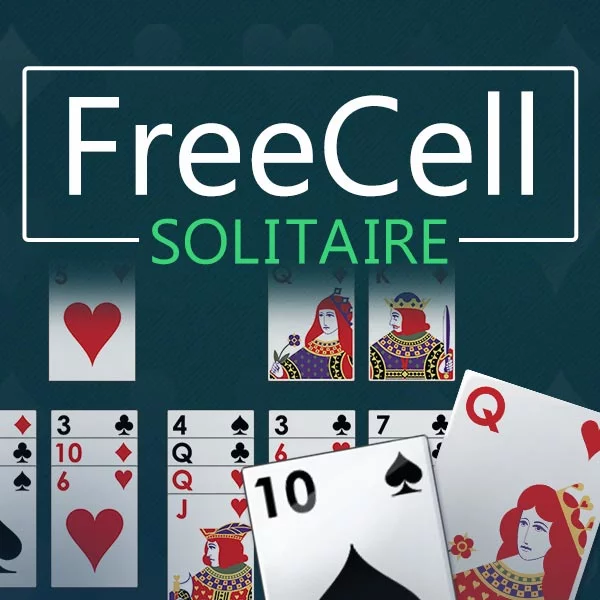
FreeCell is a classic single-player card game that rewards planning, patience, and efficient use of available space. Unlike many solitaire variants that rely heavily on luck, nearly every FreeCell deal can be solved through careful decision-making. All cards are visible from the beginning, giving players complete information and allowing them to build strategies several moves ahead. The challenge comes from organizing cards between tableau columns, temporary free cells, and foundation piles while maintaining enough flexibility to continue progressing. This balance between accessibility and depth has made FreeCell one of the most respected card games ever created.
HOW TO PLAY FREECELL
Intro
Move all cards to the foundation piles in ascending order by suit. Use empty free cells and tableau columns strategically to reorganize cards and uncover new opportunities.
Getting Started
- Identify low-ranking cards that can quickly move to foundations.
- Avoid filling every free cell too early.
- Create empty tableau columns whenever possible.
- Look for long card sequences that can be rearranged efficiently.
- Plan multiple moves ahead before committing to a decision.
Pro Tips
- Empty columns are often more valuable than free cells.
- Think about card mobility rather than immediate gains.
- Preserve flexibility by keeping temporary spaces available.
- Break difficult card stacks into manageable sections.
- Review the entire board before making major moves.
CONTROLS
Drag and Drop: Move cards between columns Double Click: Send eligible cards to foundations Touch Controls: Manage cards on mobile devices
Undo: Reverse previous moves New Game: Start a fresh deal Statistics: Track performance and wins
FREQUENTLY ASKED QUESTIONS
Why is FreeCell considered more strategic than many solitaire games?
All cards are visible from the start, allowing players to make informed decisions rather than relying heavily on chance.
What are free cells used for?
Free cells act as temporary storage spaces that help reorganize cards and create new move opportunities.
Is every FreeCell game solvable?
Most standard FreeCell deals have solutions when played correctly.
What is the biggest mistake beginners make?
Filling all free cells too quickly can limit future options and make difficult positions harder to solve.
Why are empty tableau columns important?
They provide valuable space for moving and restructuring large card sequences.
Does FreeCell require quick reactions?
No. Success comes from analysis, planning, and efficient card management.
Can FreeCell help improve problem-solving skills?
Many players enjoy the game because it encourages logical thinking and long-term planning.
What makes FreeCell enjoyable over long periods?
The combination of visible information, strategic depth, and consistent challenge keeps gameplay rewarding.
RELATED GAMES
- daily-solitaire
- freecell-solitaire
- mahjongg-solitaire
- solitaire
- solitaire-classic
CATEGORIES
card-games